Her kan du købe
Har du brug for råd? Vores højtuddannede forhandlere hjælper gerne med spørgsmål, små som store.
Find en forhandler i nærheden af dig
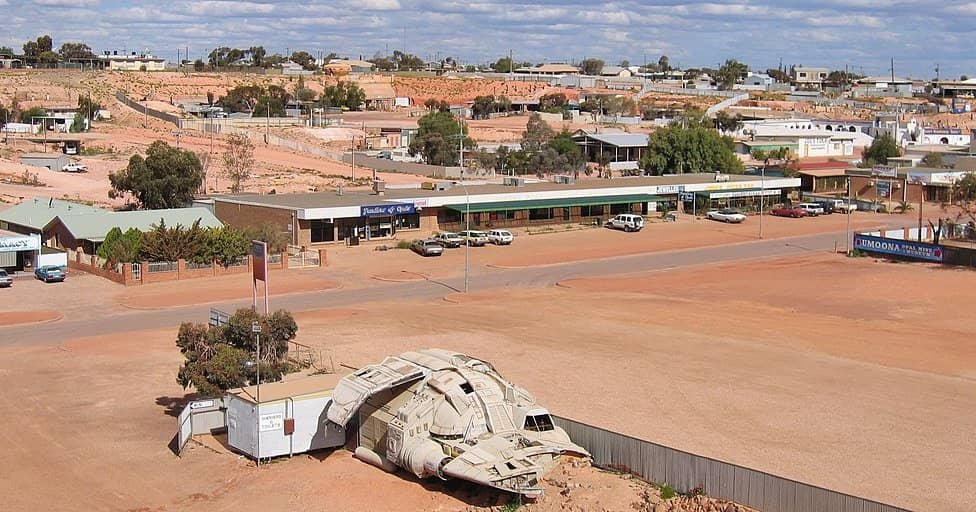
The Opal Mines still running as temp soars to 50°C
Too hot for diesel generators - no sweat for containerised solar power
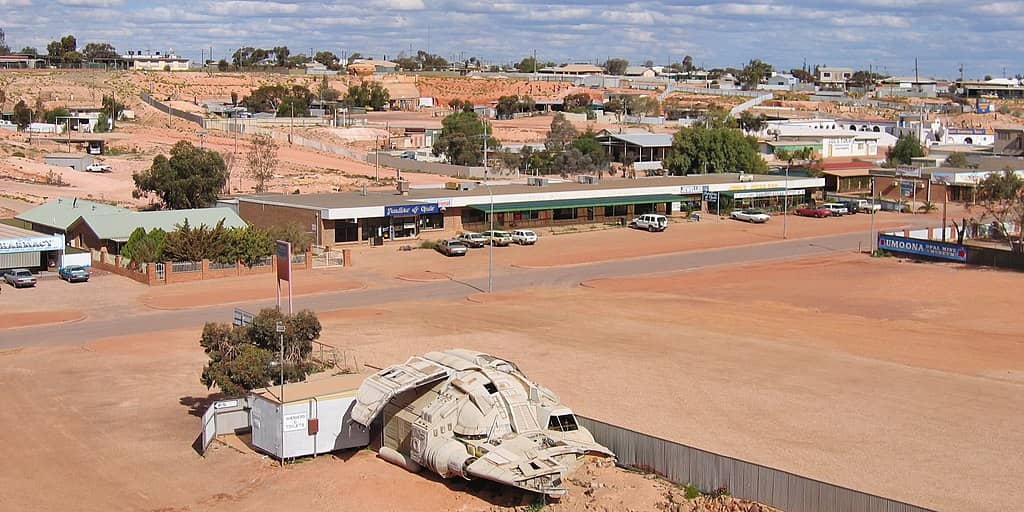
In an opal mining area where the temperature regularly exceeds 45°C, all work stops between 10 and 5.
The extreme heat doesn’t affect the miners so much, in Coober Pedy, South Australia – as they work underground …they often live underground, too, in ‘dugouts’ – but it’s just too hot for the diesel generators to run. No power, no work.
However, one mine has installed a solution which changes everything!
Forward-thinking mine owner Terry Easy lives on French Island, Victoria, which is not connected to the grid and residents adopt a low-carbon lifestyle. He was one of the first people to install a solar-powered energy system using Faradion Sodium Ion battery storage.
The servicing of that battery, connected to Victron system architecture, was overseen by Adam Smith who has since established Everest Energy – the Melbourne based Victron Energy installer – with his partner Jack Sutton.
Terry’s installation was so successful he quickly realised that a solar-based three-phase power system built into a temperature-controlled container would be capable of running his mines right through the heat of the day even when a diesel generator would have to be shut down. In fact, with solar power, he would scarcely need a generator at all except, perhaps, during extended periods of poor weather in the winter.

Opal Mining uses power to run its electric jack hammers, conveyer belts, washers, noodlers, and the UV dark rooms which help identify the precious stone from among the dirt. The whole process typically requires a 30 – 50 kVA generator.
For the power ‘container’, Terry bought an old bus for $14,000Aus allowing him to have the system built in by his trusted installer Everest Energy, which he would then drive to site – eighteen hours away – and be able to move between his mining operations as required.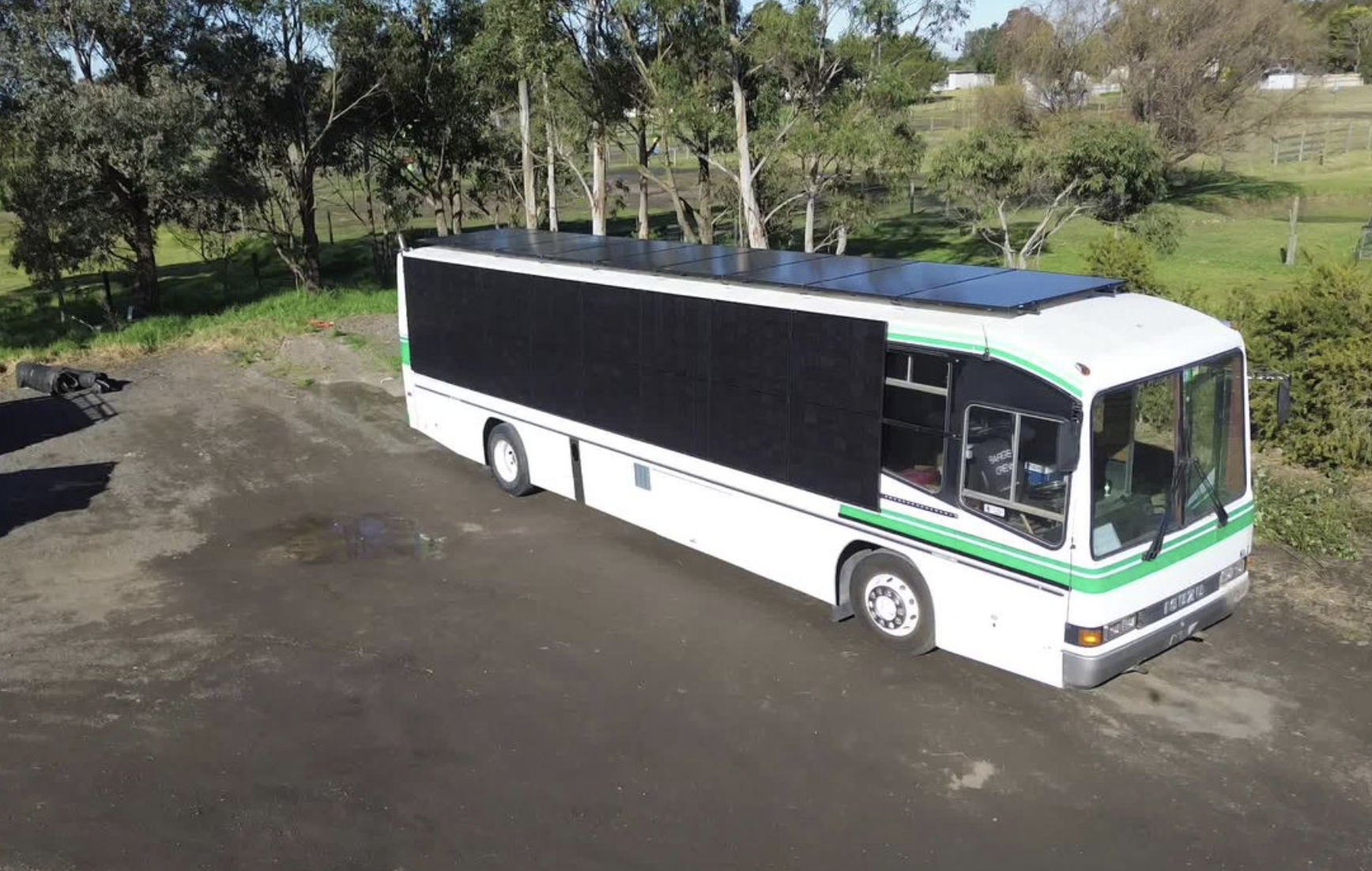
The idea of installing the panels vertically on the sides of the bus utilises all available space and although it might seem unconventional, in a location where the optimal panel tilt-angle is 39°-45°, during the winter months the vertical panels can produce similar …sometimes more energy than those on the roof.
In summer the increased angle is still productive because longer days and higher irradiance compensate for the less than optimal summer angle. Also, the panels are not in close contact with the sides of the bus but an air gap has been provided – keeping the bus cooler by adding shade and air flow.
The same drive to overcome problems resulted in the stylish installation completed by Adam Smith and his business partner Jack Sutton.They wanted to present all system devices together and the best way of doing that was to build a couple of tiered ventilated ‘stages’ at the back of the passenger area of the bus. The addition cool-blue lighting makes it look even better!
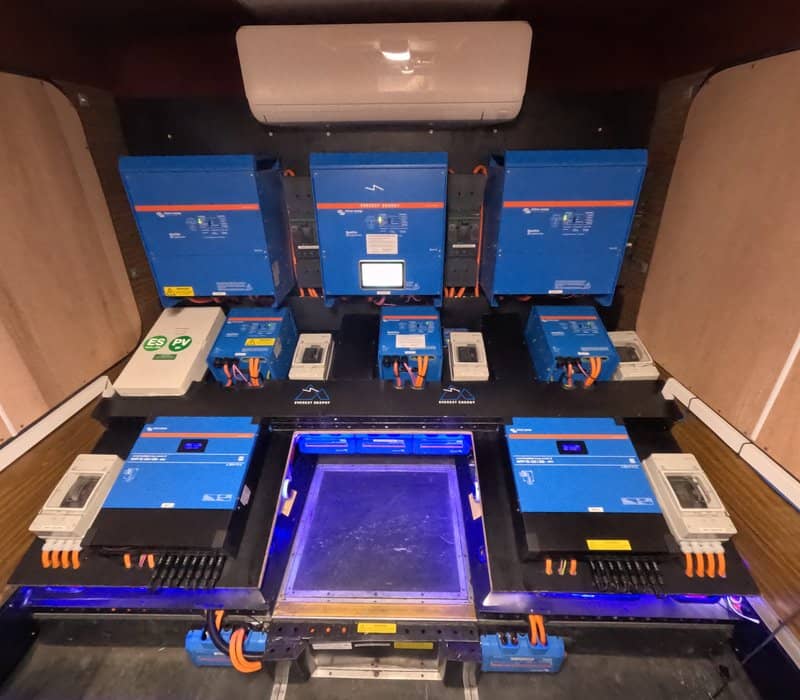
The installation is climate controlled – the bus has been insulated around the installation area and there’s a 7.1 kW Mitsubishi Heavy Industries (MHI) split system air conditioner.
Explaining the build Adam says: The main system in the bus consists of three Quattro 15 kVA inverter chargers (48V), configured for three phase operation. Power is drawn from 60 kWh of Pylontech battery storage. There are two SmartSolar MPPT RS 450/200 charge controllers; one is for the 440W Suntech all-black panels mounted on the bus which are rated at around 12 kWp; the other is for auxiliary solar panels which can be deployed in the form of flexible solar mats using 430W panels that can be pinned to the ground, allowing easy expansion of the system. However, we haven’t needed the auxiliary solar yet, as the system is performing excellently as it is.
The system build even includes an EV Charging point.
Another innovation is a secondary power system comprising a custom-built alternator power take-off running at 24 volts and capable of producing up to 9kW. It feeds three MultiPlus 24/3000 inverter/chargers, and has a Cerbo GX communication centre for monitoring and tuning.
The MultiPlus’s take their power from the alternators to deliver three-phase AC power into the second AC input of the Quattros – where it is seen as generator power. This setup allows the system to run loads or charge batteries whilst driving or when the engine is idling.
The main system has an Ekrano GX communication centre which provides remote monitoring and control on site using the touch screen, or remotely via the free-to-use Victron Remote Management platform (VRM). Engineering support is instantly available whenever it’s needed thanks to a high speed Starlink satellite internet connection – which is invaluable when the installation is 18 hours away in the middle of a dessert.
Adam wants to give a shoutout to their Victron distribution partner, Darren Helleren from Retro Power in Clayton. Adams says: Darren is our trusted Victron dealer and repair center, and he has an absolute wealth of knowledge and expertise on Victron products in Australia. We regularly exchange ideas with each other, and both of us have unique strengths across different ranges of Victron products. This collaboration reinforces the fact that Victron dealers, users, and the broader community are strongest when they support one another, helping each other leverage Victron equipment to achieve almost any conceivable power solution.
The un-edited headline image is by qwesy qwesy.
The opal miner image is the property of NSW DPI
Justin Tyers • 06 March 2026
Is it safe to step outside?
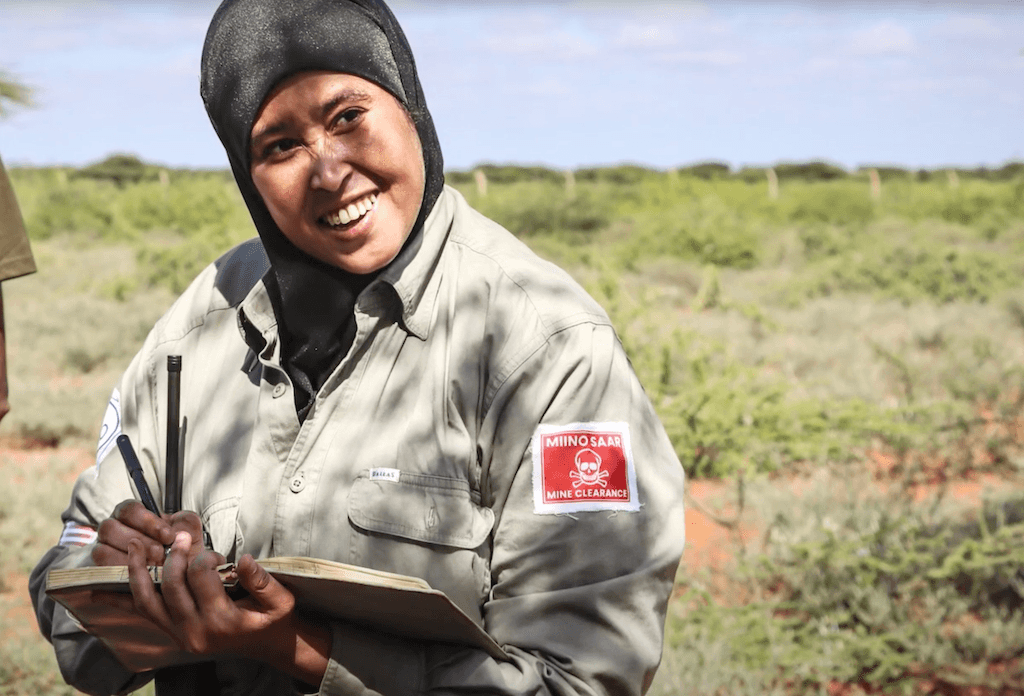
Long after the guns fall silent, land mines and unexploded ammunition continue to blight the lives and livelihoods of people who live inside conflict zones. Everyday activities – fetching water, walking to school, grazing livestock – come with great risk for villagers living where war has been fought. The risk will not expire at some future date… each dangerous device must be found and made safe. For almost forty years, around the world, the HALO Trust have been training local people to do that extraordinary work. Landmine clearance and the discovery and disposal of unexploded bombs is dangerous but essential work if life is ever to return to normal after conflict. At the same time it’s essential to educate children and local people how to recognise and behave around suspicious devices lying half-buried in the ground. HALO have a team of educators working in schools and meeting places throughout conflict zones, around the world, teaching people how to stay safe. Conflict ends in Somaliland Somaliland is one of more than 40 countries where that work has been taking place. HALO has been working in Somaliland since 1999, clearing areas heavily contaminated with landmines and other explosives remnants of war since a cross-border conflict with Ethiopia which was followed by a decade long civil war. To carry out their program, HALO employ local people. Training local people to carry out this essential work provides much needed income streams in regions afflicted by poverty. More than 98% of staff in Somaliland are from Somaliland, and a quarter of the workforce are women. An important part of HALO’s work is to leave a legacy of change – the empowerment of women changes societies. Female deminers at Daragobyala village HALO works with vision – at the same time as conducting detailed searches for munitions, they take the opportunity to improve the land on which they work for farming and grazing, building water-retaining bunds and soil improvement measures as their work proceeds. HALO’s mission is to save lives and restore the livelihoods of those affected by conflict. Among the many challenges presented by working in remote and often poor regions is the lack of infrastructure. Admed Mohamed, Engineer Only 36% of the population in Somaliland have access to electricity, most of which is generated by diesel generators – which are expensive to run and difficult to maintain and repair. Reliable power is needed for HALO’s operational needs – so the organisation has invested in a number of solar power systems for staff working in rural camps which host up to 100 people for 25 days at a time – and also back at their HQ in Hargeisa. Installed by Solar Land Africa these installations provide power for recharging metal detectors, communication devices, and tablets – which are used for recording operational progress and mapping new minefields. GPS devices are used to demarcate new minefields and to pinpoint the location of explosive weapons which have to be destroyed. Reliable lighting supports staff safety and camp security, as well as providing illumination for living spaces, washrooms and toilets. In the kitchens, food can be prepared at dawn and dusk for the workforce, and staff can attend mosque and worship in comfort. Energy Security The power system in their Hargeisa office comprises: 27 x Solar Panels of 400W offering 10.8kWp There are three 5kVA MultiPlus II inverter/chargers There are two SmartSolar MPPT 250/100 solar charge controllers Five BYD LVS Lithium Batteries offer 20 kWh At the Bali Caabane camp twelve solar panels offer 6.66 kWp There’s a MultiPlus II 5 kVA inverter/charger A SmartSolar 250/100 MPPT solar charge controller Three lithium batteries offer 15.36 kWh of energy storage. And a Cerbo GX communication device allows remote system monitoring via the free to use platform Victron Remote Management (VRM) At the Caro Yaambo camp there are six solar panels offering 3.33 kWp There’s a MultiPlus II 5 kVA inverter/charger A SmartSolar 250/100 MPPT solar charge controller 10.2 kWh of lithium battery storage And a Cerbo GX communication device allows remote system monitoring via the free to use platform Victron Remote Management (VRM) During HALO’s almost forty years of operation they have cleared more than 14.5 million explosive items – including over 2 million landmines. Fourteen million people have benefitted from that work. They’ve conducted 487,000 local community awareness sessions to more than 9.1 million people. The Somaliland programme has cleared the equivalent of 45,739 football pitches of 13,000 explosive devices, including landmines, mortars, grenades and other hazardous items. This has benefitted more than 700,000 people, improving the physical security of the population, supporting local livelihoods through access to land and natural resources, and providing safe land for essential social development. Somaliland. Female deminers at Daragobyala village Funding Crisis Regrettably, the funding for the programme has been declining over the past few years and the continuation of this life-saving work is now under threat. HALO’s goal is to help Somaliland achieve mine-impact-free status within the next few years—an accomplishment reached by only a handful of countries worldwide. Without sufficient funding, the progress will slow and communities will remain exposed to the dangers of landmines for longer than necessary If you’d like to help HALO help local people to deal with the legacy of conflict, you can visit their donations page. Let’s hear from a member of the senior operational staff who was born in the region – Hassan Kossar:
Justin Tyers • 20 March 2026
New Dawn for Antarctic Research station
Most Antarctic research stations rely heavily on diesel generators. The fuel has to be transported over vast distances at high cost and with environmental risks – a major logistical and technical challenge. The southern hemisphere Henryk Arctowski Polish Antarctic Station – which has been operational since 1977 – is undergoing a major transformation with the construction of a new research facility offering accommodation, laboratories, and recreational facilities, and supported by a huge investment in sustainable energy. The cutting edge design of the 1500m2 building secures it against the elements typically found in one of the harshest environments on Earth. Salt laden winds above 100mph are common, together with drifting snow – the aerodynamic design of this building experiences downward thrust owing to the propeller-shape of its abrasion resistant, three-arm, elevated plan – all of which is raised 3 metres off the ground. It also benefits from around 350kWp of solar array, together with 1MWh energy storage. Located on the shores of King George Island, at the northern tip of Antarctica, between 15 and 60 scientists from a wide range of disciplines: oceanography, glaciology, meteorology, seismology, geology, and ecology, amongst others, will be able to gather data and work for months at a time in secure and pleasant building which has clean and reliable power when the building becomes fully operational later this year. The original station – now almost fifty years old – was built just a few metres from the sea, but rising sea levels mean it is now just one metre from the sea and its decay is accelerating. The new building has been built 100 metres from the sea. Harvested energy is stored in 72 x 15kWh lithium batteries with a total capacity of > 1 Megawatt hours. The heart of the power system – which was built outside Warsaw, Poland by the team at Microgeneracja – was installed into a climate controlled shipping container for ease of transportation. This allows some simplification of the workload on location in Antarctica – but because of the location, some constraints applied. The maximum lift from ship to shore, for example, is 10 tons so the batteries had to be packed separately and installed in situ. It takes two weeks to unload the supply ship upon arrival. Carrying supplies for this huge and remote construction project the ship is well-laden – and not everything can be unloaded exactly when it’s needed. Working as part of the wider construction team, sharing challenges, Microenercja have installed 400 solar panels – often working during a gale – onto the roofs of sundry storage buildings. Marek Klonowski of Microgeneracja says the greatest challenge is that when you get to Antarctica there are no shops – in order to achieve success you have to arrive with everything you are likely to need. Energy from the solar panels is harvested by a number of Fronius Symo 20kW Solar Inverters. Two SmartSolar MPPT RS solar charge controllers are also installed – these powerful devices are designed for systems with large series connected PV arrays charging 48 V DC battery banks. 12 x Quattro 15kVA Inverter/Chargers provide the facility with AC power which is largely used for heating and in the kitchens. The Quattros are capable of providing a 2,400A charge current to the battery bank from generators, and from surplus energy harvested by the Fronius Symo Solar Inverters which are controlled by the Quattro’s frequency shifting ability. Automatic generator switching ensures that they will only run when necessary, and then at maximum efficiency. The station currently uses two legacy Volvo generators of 180kVA and 160kVA, but these will soon be replaced with two synchronised 250kVA generators. During the winter months when sunlight is weak and of short duration, it will still be necessary to produce energy from the generators. Power transfer at this scale needs robust and heat efficient bus bars. Sustainable energy systems not only reduce emissions but they will improve reliability, eliminating downtime; reducing the need for generator maintenance and the presence of engineers and – most significantly – reducing the need for fuel deliveries and therefore reduce the risk of contamination – one of the greatest operational risks in polar regions. Hydroelectric and wind power generation are under consideration for the future. The Arctowski Station – which is managed by the Institute of Biochemistry and Biophysics of the Polish Academy of Sciences has residents all year-round. Groups of Polish and International scientists conduct research on location in the Antarctic, receiving technical and logistical support to conduct their work. The new facility has been designed to comply with the Antarctic Treaty which places strict obligations on environmental protection. The station’s modernisation which is being built at a cost of over $46mUS, aims to ensure that Poland continues to meet these international commitments while maintaining a strong scientific presence on the continent. The roofs of ancillary storage sheds have been clad in solar panels which offer 350kWp. The new Arctowski Station is a glimpse into the future of polar research infrastructure—combining advanced science, sustainable design, and innovative energy systems. As climate change accelerates, the importance of Antarctic research grows. Arctowski is one of ten research stations in the region providing observation outposts which will help scientists understand processes that affect weather patterns, sea levels, and therefore worldwide ecosystems.
Justin Tyers • 27 March 2026
Four Season RV with Solar Power
“ I ordered my AEV Prospector and Four Wheel Camper in December 2020, took delivery in September 2021, and began full-time overland travel in October 2022. My journey has taken me through virtually all of the 48 contiguous United States. I particularly enjoy traveling Backcountry Discovery Routes (ranging from 150 to 1,500 miles), exploring vast National and State Forests (from 100,000 to 3.5 million acres), grasslands, and other remote wild places.” This week let’s meet Chet Szymecki – who posts on well-known RV community boards as RamblinChet. Data from Chet’s meticulous research and record keeping will be useful to many leisure explorers who are interested in worry-free mobile power, without plugging in. “A key question I had was whether a properly engineered solar power system could sustain daily needs without relying on a generator, shore power, or frequent interventions. The data shows that it can – and reliably so.” On the roof of his RV he has two solar panels rated at 250W each. Chet’s travels take him through Forest and mountain – as well as the plain – so that his panels are often in partially-shaded locations. The biggest power load in his set up is a National Luna 80L refrigerator, which is always on. He also charges his laptop, phone, LED interior lights, a fan, and Bluetooth speaker, among other loads. “To my knowledge, no other full-time overland traveler has publicly documented a continuous six-month period using only solar power across such varied conditions: snow in the Northeast, heavy rain, extended overcast, broken clouds, full sun, dense tree canopy, shadowed backcountry roads, and open routes. I have tracked solar production, energy consumption, battery state-of-charge (SOC), and related metrics month by month, sharing the detailed findings. The average daily consumption over these 182 days was approximately 560 Wh (102 kWh total / 182 days = 0.560 kWh/day). My intent is to provide practical, data-backed information that may assist others in designing or refining their own systems.” Chet’s solar power is harvested by a SmartSolar MPPT 100/30 solar charge controller for storage into 2 x LiTime 12V 100Ah Group 24 LiFePO4 batteries. He has a BlueSmart IP22 battery charger 12V-30A and an Orion XS 12/12-50A DC-DC charger – but neither device was used during this data period. The objective was to evaluate the solar system and battery bank capacity to support off-grid travel demands. After exercising the system for six months, covering 4,752 miles of overland trails, and with temperatures between14°F/-10°C to 88°F/31°C, there were no significant issues through fifteen states: Alabama Connecticut Florida Georgia Maine Maryland Massachusetts New Hampshire New York North Carolina Pennsylvania Tennessee Vermont Virginia West Virginia Daily consumption averages by month: 0.600 kWh/day (18 kWh / 30 days) in September 0.516 kWh/day (16 kWh / 31 days) in October 0.500 kWh/day (15 kWh / 30 days) in November 0.548 kWh/day (17 kWh / 31 days) in December 0.581 kWh/day (18 kWh / 31 days) in January 0.643 kWh/day (18 kWh / 28 days) in February “Initially, this adventure was something for me – a long-held dream to retire early, explore mountains, forests, deserts, swamps, islands, small towns and backcountry roads, and focus on improving myself physically, mentally, and spiritually. Over time it has quietly transformed. While I still deeply enjoy nature’s beauty, the journey has become more about putting others’ needs ahead of my own. We live in challenging times, and I feel truly blessed that I’m occasionally able to help others in small but meaningful ways – often simply by listening without judgement, truly seeing them for who they are, and offering a kind word or the promise of praying the rosary for them that night and just being a friend.” The histogram of maximum daily SOC over the most recent 28 days (February) shows values ranging from 81% to 100%, with 24 days between 90% and 100%. Full charge (100% SOC) was often reached confirming adequate solar capacity under February conditions – one of the lower-yield periods due to shorter days, sun angles, and frequently overcast. Performance should improve in March and April as insolation increases. The system met and exceeded the design objective of providing at least seven days of autonomy using solar alone, sustaining operation for the full 182 days. The best parts of this life are the quiet mornings in wild places, the ever-changing landscapes, and these unexpected human connections. The hardest parts are the loneliness that sometimes appears, and not being able to share these adventures with a wife. With long hair, a beard, and so much time spent alone in the wilderness, the odds aren’t great. If it’s meant to be, it will happen. My travel rhythm has also evolved. In the beginning I was constantly on the move, sleeping somewhere new almost every night. I’ve exercised my self-discipline and I’ve learned to slow down, stay longer in places, and truly savour the local history, culture, and cuisine. For the past month I’ve been exploring the Everglades and islands of the Florida Keys, often staying two or three days on one island before moving just a short distance to the next beach or trail. The histogram of minimum daily SOC for the same period ranges from 70% to 92%, with 18 days between 80% and 90%. Minimums typically occurred just before sunrise. The design target was to keep SOC above 25% under normal use; the lowest recorded value of 70% (with all others higher) indicates strong margin and reliable performance. The screenshot below, captured from the Victron Energy solar charge controller, shows the energy harvest over the past 28 days. The white portion of each column represents the percentage of time spent in Bulk charge mode, while light blue indicates the Absorption phase and medium blue denotes the Float phase. The data shows that the system reached the Float phase most days. The batteries were fully charged 80% of the time. RamblinChet’s electrics are mounted into a Zarges K470 aluminium case. Chet spent a great deal of time researching the power components he would use during his extended journey; and having made those choices, drew up and then rejected twenty or so design layouts until arriving at the optimum installation arrangement in his $900 case. Information displays and power switches are presented on the front panel following the same logic as a flight cockpit – six pack of primary gauges in the center and controls grouped by function, importance, and frequency of use. The top surface of the box houses a Wallas Nordic DT diesel stove whose exhaust is routed through the inside of the box in such a way that the electronic devices were not affected by physical contact, and remain well within their operating temperature range. That’s a pretty tall order – a number of his contacts, who know what they’re talking about, advised against it. But Chet approached this design as an engineering proof of concept, and experience has shown that the arrangement is successful. Working with detailed product information from the manuals and data sheets helped Chet understand the opportunities and limitations which would affect his design. Wiring gauges were calculated with the help of Wiring Unlimited ; all fuses are premium quality – the number one priority of the whole installation being fire safety, urged on by the unfortunate experience of others. Looking back on his working life experiences, Chet says: “After a long career working primarily in mechanical and electrical systems, I spent most of my professional life as a Technical Project Manager with a focus on robotics and automation. I had the privilege of working at companies such as Lord Corporation, Siemens VDO, Swisslog, and NASA Langley Research Center on projects including the Mars Science Laboratory Entry, Descent & Landing Instrument (MEDLI), the Program to Advance Inflatable-Decelerators for Atmospheric Entry (PAIDAE), and the Autonomous Landing Hazard Avoidance Technology (ALHAT).” The first image Chet sent us to illustrate his journey was of a leaf, covered with dew. We wondered why. It’s fitting to close this story with Chet’s words, which resonate with us all. “ I got up early and went for a walk in the forest by myself. My mind was pretty heavy with thoughts about some of the men I served with – their faces kept coming back to me, and how their deaths never felt like heroic sacrifice or anything glorious. To me they just felt futile, wasteful, and tragic. I spent a good while walking and praying for their souls. Then I almost stepped right on this one autumn leaf lying flat on the ground. I stopped, knelt down, and just looked at it for a minute. The raindrops on its veins were catching the light like small rosary beads. It hit me how beautiful it was in its own quiet way – its green days were over, it had done its job feeding the tree and dancing in the wind, and now it was just surrendering, giving itself back to the soil for whatever comes next. For some reason it felt like God was showing me something right there – like there’s this careful, holy beauty even in endings that we usually just walk right past without noticing. I pulled out my phone, snapped one picture, and wrote those words for the picture on the spot. My eyes became heavy while composing my thoughts. When I got back in the truck and started driving along the trail (NEBDR), I rolled the windows down and played Albinoni’s Adagio in G Minor softly. That song always takes me straight back to the end of an old movie Gallipoli from the early 80s – young Mel Gibson is in it. If you ever watch it, you’ll see what I mean. Those young guys running into machine guns – it just breaks your heart because it was all so pointless. That little leaf became a kind of symbol for me of all those lives that end too soon, and how easy it is to miss the sacredness in them unless you slow down and look closer .” You can follow Chet, hear more about his system, follow his journey. and ask questions here on the Victron Community .
Justin Tyers • 17 April 2026
Iman Verte
Lycée Iman is a school in Nouakchott, Mauritania, with over 500 pupils from nursery age to seniors. The school’s management decided to invest in a multi-faceted educational sustainability initiative which would help its pupils to learn about solar energy, water sustainability and waste management. The most ambitious part of the programme was for the entire school to become self-sufficient in solar energy. Because the city’s electricity grid is unreliable they had for many years relied on a 65 kVA generator to run their air conditioning units, lighting and educational aids during blackouts. Several obstacles to energy independence lay ahead! An initial site survey by the school’s chosen solar installation partner, SEEMA SOLAR , found that the AC electricity distribution already in place – wiring, switches and sockets – was in a dangerous condition such that it was exposing students and staff to risk. Seema Solar’s three month installation project began with re-wiring switches and outlets in order that their new power supply would be safe for use. As part of that renewal, the old air conditioning units and fridges were replaced with more energy-efficient models in order to optimise the school’s overall power consumption. As a result, since December 2025, the school has been self-sufficient in electricity. The new installation is grid-tied so that the electricity grid can provide back-up power if required. The introduction of reliable power has brought forward an evolution in the school’s teaching practices: in the past, lessons were mainly conducted using chalk and blackboard – whereas today, it uses video projectors. There’s been a transition to digital learning too – a major advancement which has improved the quality of education and brought the school up-to-date with today’s educational needs. Regardless of network blackouts in the city outside, the school’s power – including lighting, IT, and educational devices – is now guaranteed. SEEMA designed, supplied, and installed a 72 solar panels. 30 kWh of Lithium storage and an AC output power of 50 kVA. The power installation consists of: 24 kWp of single-phase low-voltage PV modules 3 SmartSolar MPPT 250/100 solar charge controllers 3 MultiPlus-II 48/10000/140-100 panels 1 Fronius SYMO 20 AC Inverter 6 Lith-Tech TBX4000 / 51V-100Ah batteries A Cerbo GX provides data communications between devices, live system data to the GX Touch 70 local user interface, and also remote access allowing Seema to monitor and manage the system instantly via Victron Remote Management VRM . With uninterrupted power supply 24/7 the school is proud to have reached this important milestone of transitioning to clean energy. The “Green Iman” project uses the electrical grid very little and the generator has been removed. Students are made aware of the challenges of future energy and eco-friendly practices, while some teachers integrate these themes into their teaching methods to raise awareness from an early age. Seema Solar undertook the entire project themselves, from technical design and equipment procurement, through to the commissioning of the solar installation. Seema will support Lycée Iman in the longer-term, offering continuous technical partnership to ensure the system’s flawless performance and reliability. Seema also takes the opportunity of this initiative to teach students and staff about renewable energy. Moctar ETHMANE – owner at SEEMA SOLAR – says: “ The main challenge was, above all, the financial aspect. In Mauritania, there are very few support mechanisms for this type of initiative, and the school had to finance the project entirely from its own funds to transition to solar energy .” “ Another major challenge was the initial condition of the electrical installation, which did not meet standards. From our very first contact with the school, this was identified as a critical issue, ” he says. The school is located at the edge of the Sahara desert – unsurprisingly intense heat is often an obstacle to work. Frequent voltage drops on the electricity grid prevented the air conditioning from functioning properly – a situation which directly affected learning and sometimes impacted on students’ health. Moctar says that they are particularly satisfied to have ensured a stable power supply which provides students with a safer, more comfortable, and more suitable learning environment. The project was a major investment for Lycée Iman. The funds used for the sustainable power transition were their own. In tribute to the school’s management team, Moctar says: “ Most importantly, we are proud of the quality of the collaboration with the school’s management, who trusted us from the beginning and fully supported the implementation of this project .” You can contact, connect and follow Seema Solar at their social media sites at LinkedIn and Facebook . Let’s take a look at the school and what has been achieved:
Beril Berkem • 23 February 2026
VictronConnect App v6.30
VictronConnect app v6.30 brings a range of new features designed to make system monitoring and management easier for both professionals and end-users. These include VRM integration, new tools for system monitoring, more insight during firmware updates, and a Batch Programming feature aimed at simplifying work for professionals. In the next sections, we take a closer look at what’s new in VictronConnect v6.30. VRM integration The VictronConnect app has been the go-to app for direct access to Victron products and system monitoring, allowing configuration, firmware updates, and real-time monitoring via Bluetooth with quick access from your phone. The VRM Portal , on the other hand, gives full remote system monitoring from anywhere in the world with internet connection, providing full system overview, detailed performance analysis, remote support, and tools for fleet and multi-system management. VictronConnect v6.30 brings these two worlds closer together. VRM dashboard access is now built directly into the VictronConnect app. Previously, when accessing a system remotely via the VRM tab, the app redirected you to the VRM Portal for full system information. You can now see the system dashboard directly in VictronConnect, including control switching, overview data, and Dynamic ESS information such as costings and schedules, making it easier to understand what is happening across your system from one place. VictronConnect on Android Auto If your vehicle supports Android Auto, you can now view key system information directly on your car’s display while driving through the VictronConnect app on your phone. After updating to VictronConnect v6.30, a VictronConnect icon will automatically appear in Android Auto once a phone is connected. The feature uses Bluetooth Instant Readout and requires no additional configuration or GX device. If Instant Readout data is available for a product in the VictronConnect app (for example, the Smart range), it will also be shown in Android Auto, creating a simple plug-and-play experience. This makes it easy to monitor system status safely while driving, especially in campervans, motorhomes, and professional vehicles. Android widgets and notifications Android users can place widgets on their phone home screen to quickly see important system information without opening the app. It is also now possible to enable notifications so your phone alerts you if something needs attention, giving you peace of mind that your system is running as expected without needing to constantly check it. Notifications and Widgets use Bluetooth Instant Readout and work when your phone is within range of supported products. Improved Trends Trends data is now clearer and more detailed, making it easier to see how your system has been performing over time. Updated graphs are easier to read and interpret, while also giving access to deeper system information, helping build a clearer picture of energy production, consumption, and battery behaviour. Trends data is now also included when exporting product settings, making it easier to keep records or share data for support or analysis. This feature is available for all products that support stored Trends. Smarter firmware updates With VictronConnect v6.30, firmware updates now show release notes directly in the update screen, making it easier to see what has changed before updating. The release notes remain visible during the update process, giving clearer insight into each firmware version. The built-in firmware library can now also update itself automatically when an internet connection is available, keeping the latest firmware versions ready even between app updates. Firmware updates can still be carried out without an internet connection, just like before. Batch programming And finally, a feature many installers will appreciate: Batch Programming. You can now apply setting files and firmware updates across multiple devices at the same time. The feature supports both VE.Direct (wired) and Smart (Bluetooth) products, making it easier to manage mixed systems. The short video below gives a quick overview of how it works. Wrapping up VictronConnect v6.30 makes it easier to stay connected to your system, whether you are standing next to it, travelling, or checking it remotely. By bringing VictronConnect and VRM closer together, and adding practical tools for daily use, this update helps make system monitoring, control, and maintenance simpler for everyone using Victron systems. We hope you enjoy using these new features. Your feedback helps shape future updates, so feel free to share your experience or suggestions in the Victron Community .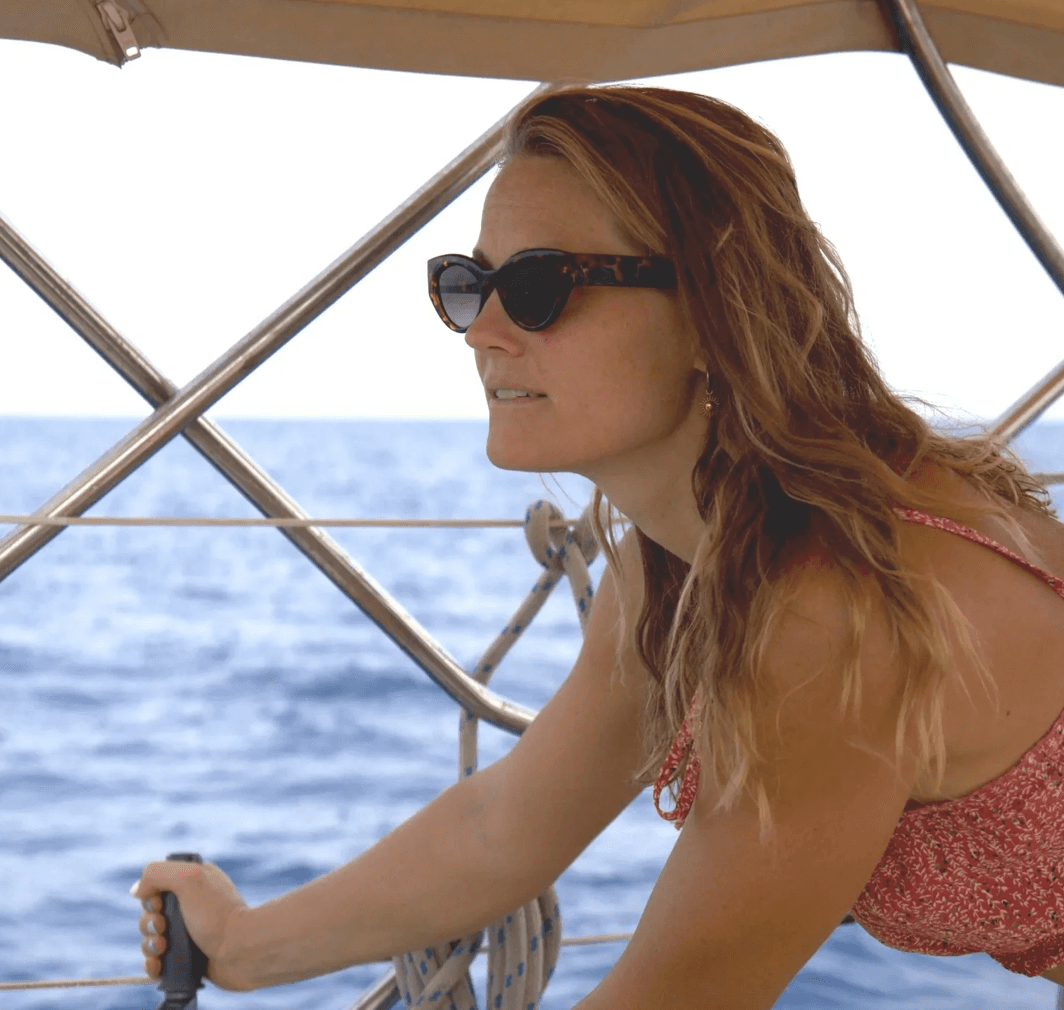
Justin Tyers • 13 March 2026
Thousands watching solo sailor
If you don’t easily get sea sick why not join Norwegian Helga Marie Løvenskiold Kveseth – who goes by the name Mara – on her LIVEstream as she crosses the Atlantic? Already having 25,000 miles under her keel, Mara is sailing her Saltram Saga 36ft double-ender called Showgirl to St Martin in the Caribbean in order to qualify for the Golden Globe Race 2026. The Golden Globe is an epic yacht race – more than twenty participants are expected to cross the start line later this year on September 6th to sail singlehanded around the world using only the equipment which was available to circumnavigators sixty years ago. Using a sextant to make celestial observations, and plotting their position on paper charts, skippers spend nine months at sea crossing world’s remotest oceans in their grandest moods. It’s not for the feint hearted. For her qualifying passage Mara’s boat is equipped with the latest technology in order to bring us closer to the experience of sailing alone. Her 24 hour live stream via Starlink router, together with other domestic conveniences, uses a lot of power, The original electrical system onboard was unable to support the planned loads so she enlisted the help of Sea & Land Yacht Works to do a power audit of all her domestic and navigation devices and provide a system which could support the ambition. Sea & Land Yacht Works is a marine service provider based in Rhode Island U.S. specializing in marine electronics, electrical and marine systems. Interestingly, they offer their technical service all round the world by contracting qualified installers to build systems from their drawings, using specifications which meet ABYC certification standards. Company founder Michael Garretson is an AYBC Master Technician and also a Mechanical Engineer. Working from his drawings installer Electrical Marine Services Gibralter built Showgirl’s power system in Gibralter just before Mara set off on her solo transatlantic passage. Power Assumptions The power audit for Showgirl’s electronic devices suggested a daily power consumption of 492Ah Equipment Load Fridge 60 NAV Instrument 45 Starlink 240 Rasberry pi 28 Camera 47 dgi 16.3 random cameras 7.5 VHF 12 Lighting 15 Phone charging 2 handheld 0 Watermaker 19 Total: 491.8 In order to provide that power three power generation sources were installed: Showgirl’s four solar panels of 100Wp each would typically provide 116Ah per day . The solar harvest is controlled by two MPPT solar charge controllers of 100/30 and 75/10 to charge a 12V lithium battery bank of 960Ah. As the vessel sails a Watt&Sea Hydrogenerator 600 produces power. Assuming an average speed of 4.5knts, that model will produce 157Ah per day There’s a 275A alternator on board controlled by Arco Zeus 275L alternator regulator to maximise the power harvest. Running the engine at 1500rpm for an hour is likely to produce 230Ah . Total daily production from power generation is 503Ah . Power consumption and harvest is monitored by a number of BMV battery monitor across the MPPT solar chargers, alternator output, Watt & Sea hydrogenerator output, and the lithium battery bank loads. There is an Orion DC to DC charger to manage battery charging for Showgirl’s dual battery systems – engine starting and domestic use. A MultiPlus 12/1600/70 Inverter/Charger provides AC power. A Cerbo GX communication centre harmonises all Victron and third-party devices and makes real time data monitoring and programming available from anywhere in the world via the Starlink satellite router. The same information is just a fingertip away on board via the GX Touch 50 user interface. Showgirl is a little more than halfway across the Atlantic at the time of writing. Once she arrives, Sea and Land Yacht Works plan to install more custom solar panels and additional electrical work before she recrosses the Atlantic a few months later – live streaming again – in preparation for her Golden Globe Race participation. You can ask Mara a question via the live chat function of her LIVEstream. She typically makes time to answer questions on camera after sunset each day – her time. She says she’s going to miss all the live chat on her Golden Globe Race! Let’s see how she’s getting on: If you’re already in the Caribbean on board a boat – and particularly if you want to find out more about reliable power or workshop a power problem – take a look at our recent story here.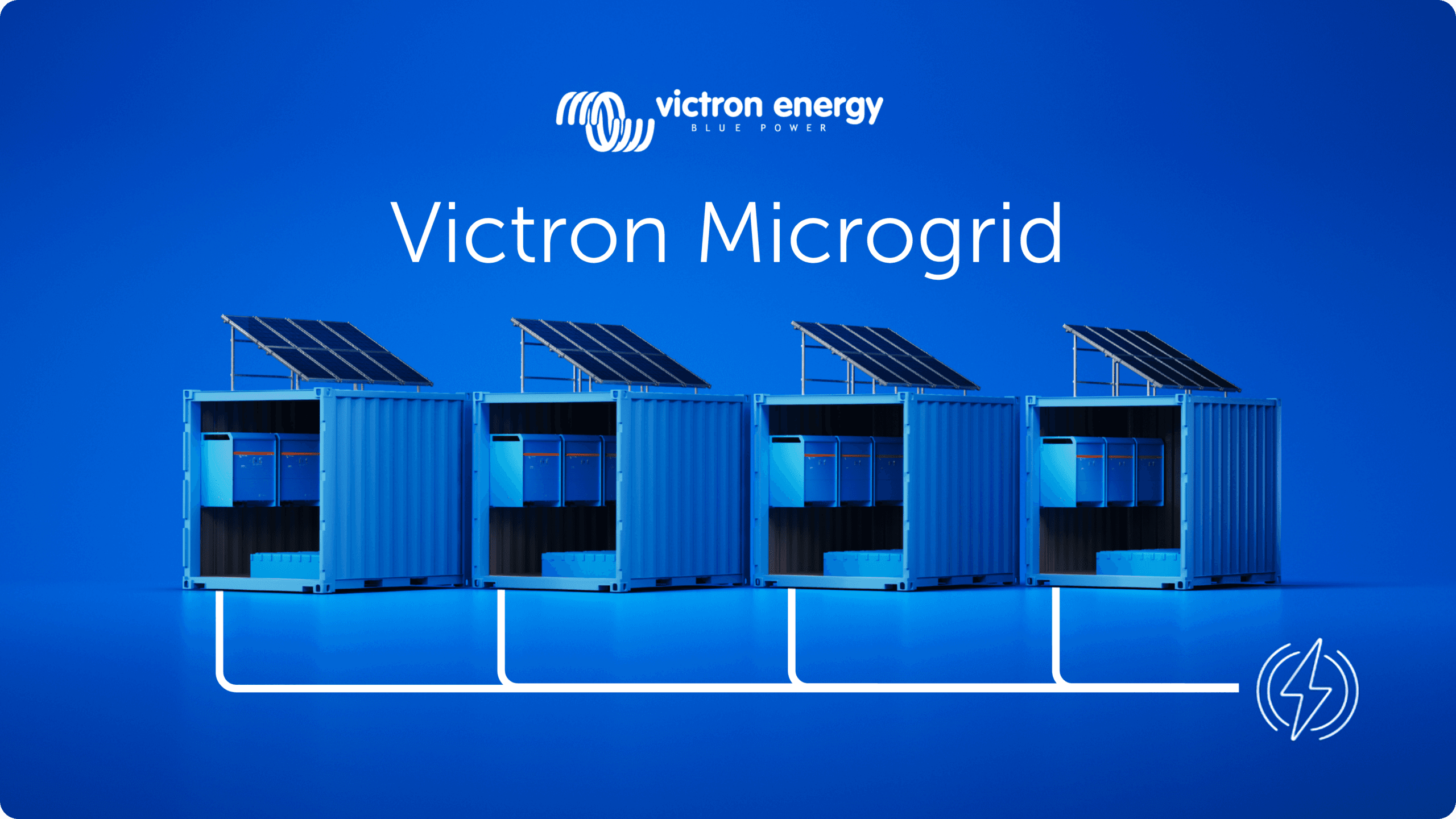
Guy Stewart • 13 April 2026
Introducing Victron Microgrid
What if you could build large off-grid systems with the same simplicity as small ones – just by adding more independent units, increasing reliability, and scaling total capacity as you grow? Large off-grid systems have traditionally been complex to build and difficult to change; Victron Microgrid takes a different approach. Victron Microgrid allows multiple independent Victron inverter/charger systems, named “Power Banks” to operate in parallel on a shared AC bus – even when Power Bank sizes vary – forming high-power off-grid systems that automatically share the load. Each Power Bank is a complete, independent Victron installation with its own inverter/chargers, batteries and monitoring. No central controller, and no data communication wiring between units. If you need more power you can just add another Power Bank, and scale the system – up to 400 kW. Why Victron Microgrid? Scale beyond a single system. Multiple Power Banks on a shared AC bus let you build off-grid systems much larger than a single VE.Bus system, without the complexity and risk of one big centralised inverter installation. Keep running when a unit goes down. Each Power Bank operates on its own. If one is taken offline for service or develops a fault, the rest continue supplying the AC bus uninterrupted. Removing any single point of failure. Add or remove capacity without downtime. Connect more Power Banks to the Microgrid as demand grows. Disconnect them when demand drops or maintenance is needed. No reprogramming required, and the AC bus stays live to loads the whole time. Build with what installers already know. No new hardware. Victron Microgrid uses the same inverter/chargers, batteries, charge controllers and GX devices that installers already work with. Each Power Bank is monitored through its own GX device and VRM. Move equipment between sites. Perfect for rental: containerised Power Banks can go from one project to the next. When a job is done, the same hardware returns to the depot and goes out again ready to join another Microgrid. A standard, efficient container build can be used to satisfy a broad range of applications by simply joining them together via AC wiring on site. Applications Because each Power Bank is self-contained, Victron Microgrid works well on sites where demand changes over time and equipment may need to move between projects. 1. Generator rental fleets Rental operators can treat Power Banks as modular fleet assets. Instead of maintaining many fixed-capacity systems for different jobs, stock standardised Power Banks and combine them to match each contract. A smaller deployment might use two Power Banks; a larger job may need six or more. When a contract ends, the same units return to the depot and go out again in a different combination. Power Banks can be grouped together as a Microgrid in VRM to provide remote monitoring, alarms and visibility across active sites. 2. Construction sites Construction sites often have a stable base-load with temporary spikes in demand. Site offices, lighting and tools may run for months at one level, then a crane, welding gear or other heavy equipment drives consumption up. Extra Power Banks can be brought to site, connected to the AC bus for the peak period, and removed when it’s over. Match capacity to the actual stage of the project and reduce dependence on generator runtime where silent, battery-based power is preferred or required. 3. Events and festivals Demand profiles shift across bump-in, live operation and bump-out. Peak power may only be needed for part of the schedule, but reliable supply is needed throughout. Deploy more Power Banks for peak periods, fewer for quieter ones with no need to redesign the system. If the programme changes, add capacity quickly by connecting another Power Bank to the AC bus. And if one unit has an issue, the rest keep running. 4. Expanding existing off-grid systems Victron Microgrid is also a practical way to upgrade an existing Victron off-grid installation. Instead of pulling a working system apart to make it bigger, install a second Power Bank alongside it and connect both to the same AC bus. The original system stays as it is and just becomes one of the Power Banks in the Microgrid. This is useful for containerised or remote installations where reworking what’s already there would be disruptive. Each Power Bank manages its own charging, so the new unit needs its own charging sources such as additional solar, a DC generator connection, or other DC charging. How Victron Microgrid works A Power Bank is a complete Victron off-grid system: one or more VE.Bus inverter/chargers, a battery bank, DC distribution, DC charging sources, and a GX device for monitoring. In a Victron Microgrid, multiple Power Banks connect to a shared AC bus and work together as one large power system. Load sharing between units happens automatically via AC voltage and frequency, without the need for a central controller, communication between power banks or complex configurations. This decentralised approach keeps the system simple and reliable. Three-phase and split-phase configurations are supported as well. Independent charging – no central controller needed Decentralised DC charging is what makes this controller-less approach work. Each Power Bank manages its own state of charge using its own charging sources. Victron supports a range of charging options: MPPT solar charge controllers for DC-coupled PV AC chargers (such as MultiPlus, Quattro or Multi RS) connected to an AC generator or other AC supply, independent of the Microgrid AC bus. DC generator integration (including start/stop automation) Getting started Victron Microgrid is available via a dedicated VE.Bus firmware for MultiPlus, MultiPlus-II, Quattro and Quattro-II. Walk through the concept, configuration and commissioning with these training videos: Introduction Programming Demonstration The Technical manual covers installation and configuration in detail. See this Slide deck for a more visual overview. Contact a Victron distributor to discuss whether Victron Microgrid fits your application.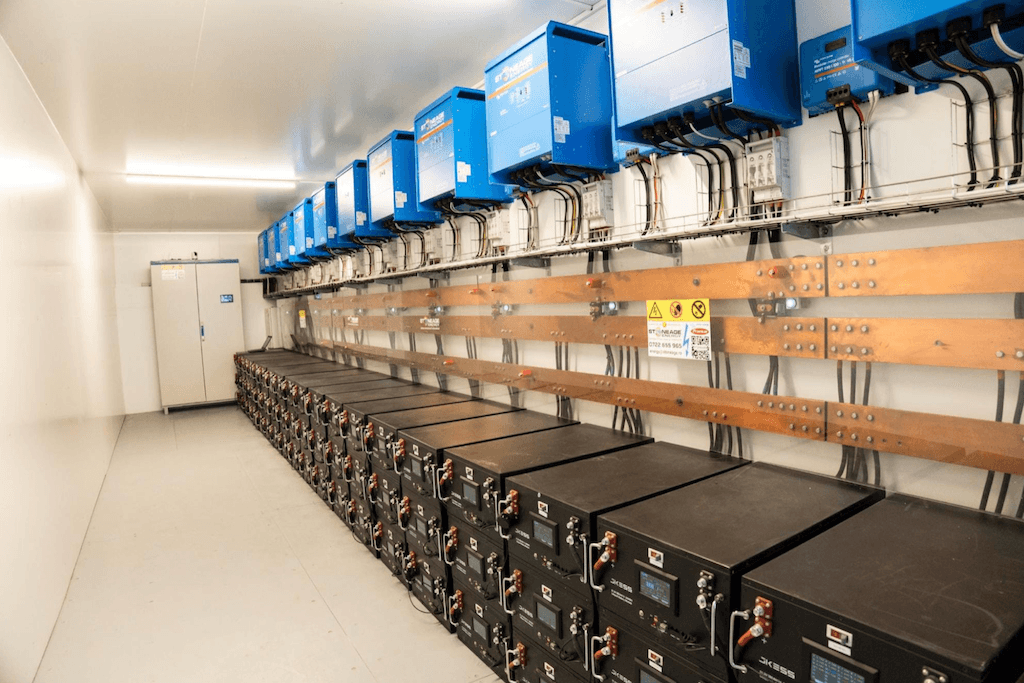
Justin Tyers • 20 February 2026
Poultry farm’s 1.3MWh storage
After months of work: evaluating the farm’s grid power consumption, followed by design then build of the containerised battery based power system – the time finally arrived to demonstrate the resilience of the Puiul Dobrogean poultry farm’s 180kVA private power plant …by disconnecting the electricity grid whilst the power consumption was running at 141kW! Nothing happened. In a good way. The load was transferred to the battery-based energy installation without so much as a flicker! The Romanian poultry farm consumes 1.5MWh of energy per day in the height of summer and had been relying on two back up generators to overcome grid failures; but when one of the generators failed to start – endangering livestock – it was clear that there was a vulnerability which could not be tolerated. Ionel Dobre – the owner of Puiul Dobrogean farm – started his business in 2012 and has expanded it steadily. For him this realisation of energy insecurity brought with it an opportunity – to make a financial investment to drastically reduce energy costs at the same time as guaranteeing energy security. The new installation is projected to supply between 93% and 95% of the farm’s energy consumption. (L) Ionel Dobre (R) Ovidiu Stan Ovidiu Stan is the General Manager at Stoneage Energy – who are based in Cluj-Napoca, Romania – and wanted to implement a technical solution which could charge this huge battery bank efficiently, and through all seasons – not just the summer. Based on the results Stoneage Energy had experienced with their previous large installations, they decided to increase the battery charging capacity by adding 12 MPPT solar chargers to the 12 Quattro Inverter/Chargers – to provide a additional 1200 amps of charging capacity. Storage: Over 1.3 MWh in 48V LiFePO4 batteries (Low Voltage). Low voltage was chosen for safety and because it allowed the use of the most robust inverters available. Inverters: 12 x Quattro Inverter/Charger 15000VA – capable of delivering 180 kVA and managing load peaks – 15000 models can actually handle 25000W peaks. AC/DC Architecture: A hybrid ecosystem using 300 kW of Fronius Tauro 100 inverters (AC-coupled) for direct daytime consumption and 12 SmartSolar MPPT 250/100 solar charge chargers = 1200 Amps (DC-coupled) to efficiently and directly charge the battery bank. PV panels: Over 600 bifacial panels rated at 645W (510 pcs on the 3 Tauros + 96 pcs on the 12 MPPTs) offer a total of ≈ 400 kWp. Monitoring: Cerbo GX & VRM Portal . Safety via Loop: The hall’s electrical grid was designed in an underground loop. If a cable is accidentally severed (e.g., by an excavator), power is supplied via the other arm of the loop, ensuring 100% continuity. AI Automations with Node-RED : Node-RED Temperature de-rating and shutdown code The system features several innovations developed by Stoneage Energy engineers specifically for large projects like this one, including: A huge pre-charge & emergency shutdown system, controlled by in-house software for controlling and monitoring more than 100 parameters of the whole system. Rapid shutdown & pre-pre-charge: For complete system disconnection in the unlikely event of any fault. Dynamic Power Balancing: For large systems when solar production is low and/or the grid is weak or unstable. Battery protection mode: Maintains a useful power reserve for power outages or a low next day power harvest forecast, consumption, and grid energy costs. Ionel says “Energy is monthly business cost. Once you install a system like this, that cost becomes an investment – this equipment is built to last 15-20 years.”Har du brug for råd? Vores højtuddannede forhandlere hjælper gerne med spørgsmål, små som store.
Find en forhandler i nærheden af dig
Tjek vores supportressourcer eller kontakt din originale forhandler for dedikeret support, reparationer eller garantianmodninger.
Support
Læs mere om vores brancheførende 5-års standardgaranti og globale reparationsservice.
Garanti

©Victron Energy 2026